




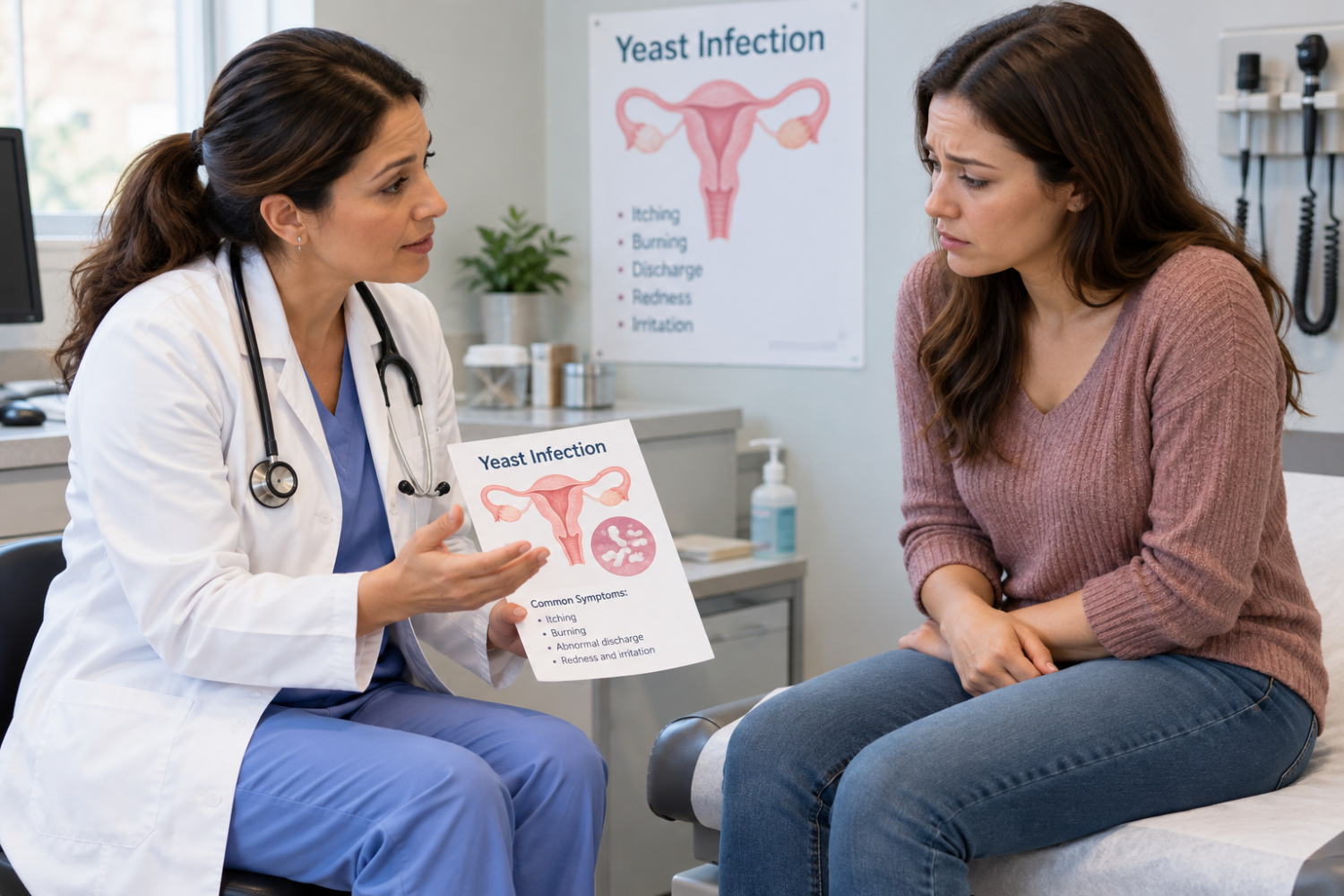
Yeast Infections – Prevention and Safe Treatment
Vaginal Yeast Infections in Women: Symptoms, Causes, Treatment, and Prevention
A vaginal yeast infection is a common condition caused by an overgrowth of Candida, a type of fungus that normally lives in the vagina in small amounts. When the natural balance of microorganisms changes, Candida can multiply and cause itching, irritation, redness, and abnormal vaginal discharge.
Although yeast infections are usually treatable, their symptoms can resemble other vaginal conditions, including bacterial vaginosis and certain sexually transmitted infections (STIs). Understanding the symptoms, possible causes, and available treatments can help women seek appropriate care and avoid unnecessary discomfort.
At Shafa Medical Clinic, personalized primary care can help women evaluate vaginal symptoms, identify possible causes, and determine when testing or treatment is appropriate.
What Is a Vaginal Yeast Infection?
A vaginal yeast infection, also called vulvovaginal candidiasis, occurs when Candida grows excessively in the vagina and surrounding vulvar tissue.
Candida may be present in the vagina without causing symptoms. An infection develops when the local environment allows the fungus to overgrow.
Yeast infections are common and are not generally considered sexually transmitted infections. They can occur in women who are sexually active and those who are not.
Common Symptoms of Vaginal Yeast Infections
Symptoms can range from mild irritation to significant discomfort. Common signs include:
- Vaginal itching: Persistent itching around the vaginal opening or vulva.
- Redness and swelling: Irritation or inflammation of the external genital area.
- Thick, white discharge: Discharge that may resemble cottage cheese, usually without a strong odor.
- Burning or soreness: Discomfort during urination or sexual intercourse.
- Vulvar irritation: Tenderness, soreness, or small cracks in the irritated skin.
Not every woman experiences all these symptoms. Because similar symptoms can occur with other conditions, symptoms alone cannot always confirm a yeast infection.
What Causes Yeast Infections in Women?
Several factors can contribute to Candida overgrowth. In many cases, there is no single identifiable cause.
1. Antibiotic Use
Antibiotics can reduce certain beneficial bacteria that help maintain the vaginal microbial balance. This may allow Candida to multiply, particularly in women who are susceptible to yeast infections.
2. Diabetes and Elevated Blood Sugar
Women with poorly controlled diabetes may be more susceptible to yeast infections. Elevated blood glucose can contribute to an environment that favors fungal growth and may make infections more difficult to manage.
Women experiencing frequent yeast infections may benefit from discussing their blood sugar levels and diabetes risk with their healthcare provider when clinically appropriate.
3. Hormonal Changes
Changes in estrogen levels can influence vaginal tissue and the vaginal environment. Hormonal fluctuations associated with the menstrual cycle, estrogen-containing medications, and other hormonal changes may affect susceptibility in some women.
4. Immune System Changes
Conditions or medications that suppress the immune system can increase the risk of persistent or recurrent Candida infections.
Examples include certain immune-suppressing medications and some chronic medical conditions.
5. Moisture and Skin Irritation
Warm, moist environments and irritation from certain personal care products may aggravate the vulvar area. Tight, damp clothing can contribute to discomfort, although clothing choices alone do not necessarily cause a yeast infection.
How Are Yeast Infections Diagnosed?
A healthcare professional can help determine whether symptoms are caused by Candida or another condition.
Medical History and Examination
Your clinician may ask about your symptoms, their duration, previous infections, recent antibiotic use, medications, and relevant medical conditions.
Depending on your symptoms, a pelvic examination may be recommended to evaluate irritation, discharge, and other possible causes.
Vaginal Testing
Testing may include examining a sample of vaginal discharge under a microscope or performing other laboratory tests.
A vaginal culture or molecular test may be useful when symptoms persist, infections recur, or the diagnosis remains uncertain. Testing can also help identify Candida species that may respond differently to treatment.
Conditions That Can Resemble a Yeast Infection
Other conditions can cause itching, burning, or changes in vaginal discharge, including:
- Bacterial vaginosis: Often associated with thin discharge and a fishy odor.
- Trichomoniasis: A sexually transmitted infection that may cause irritation and abnormal discharge.
- Other sexually transmitted infections: Some can cause genital discomfort, discharge, or urinary symptoms.
- Contact dermatitis: Irritation caused by soaps, detergents, fragrances, or other products.
- Other skin conditions: Certain inflammatory skin disorders can cause vulvar itching and soreness.
An accurate diagnosis helps ensure that treatment addresses the underlying cause.
Treatment Options for Vaginal Yeast Infections
Treatment depends on symptom severity, medical history, previous treatment response, and whether infections are recurrent or complicated.
Over-the-Counter Antifungal Treatments
For an uncomplicated yeast infection, vaginal antifungal medications may be available without a prescription.
Common options include:
- Clotrimazole: Available in vaginal creams and other formulations.
- Miconazole: Available in vaginal creams and suppository formulations.
These treatments are used according to the product’s directions, often over one to seven days depending on the specific formulation.
Vaginal creams and suppositories may weaken latex condoms and diaphragms, so check the product labeling for precautions.
If this is your first suspected yeast infection, or if you are unsure about the diagnosis, consult a healthcare professional before self-treating.
Prescription Antifungal Medication
An oral antifungal medication, such as fluconazole, may be appropriate for some nonpregnant women with an uncomplicated infection. A clinician can determine whether it is suitable based on the patient’s medical history, medication interactions, and other considerations.
Oral treatment is not appropriate for everyone. Women with certain liver conditions or those taking interacting medications may need an alternative.
Women who are pregnant or may be pregnant should contact a healthcare professional before treatment because medication recommendations differ during pregnancy.
Treatment for Recurrent or Complicated Infections
Some women experience repeated yeast infections or symptoms that do not improve with standard treatment.
Recurrent vulvovaginal candidiasis is commonly defined as three or more symptomatic episodes within one year. These cases may require additional testing and a longer treatment course.
A clinician may recommend a vaginal culture or other testing to identify the Candida species and assess possible treatment resistance. Selected patients may benefit from an extended treatment regimen followed by maintenance therapy under medical supervision.
Repeatedly using over-the-counter antifungals without confirming the diagnosis may delay appropriate treatment for another condition.
How to Reduce the Risk of Yeast Infections
Not all yeast infections can be prevented. However, certain habits may reduce irritation and support vulvar health.
Practice Gentle Hygiene
- Wash the external genital area gently with water or a mild, unscented cleanser.
- Avoid vaginal douching, which can disrupt the normal vaginal environment.
- Avoid scented sprays, fragranced wipes, and other products that cause irritation.
- Do not use harsh cleansers or insert home remedies into the vagina.
The vagina naturally maintains its own environment and does not require internal cleansing.
Choose Comfortable, Breathable Clothing
- Change out of wet swimsuits and sweaty clothing when practical.
- Wear comfortable underwear that allows airflow.
- Avoid clothing that causes persistent friction, moisture, or irritation.
These steps may improve comfort, although there is limited evidence that clothing changes alone prevent yeast infections.
Manage Blood Sugar When Needed
Women with diabetes should follow an individualized plan to manage blood glucose. Good diabetes management supports overall health and may help reduce susceptibility to recurrent yeast infections.
Use Medications Appropriately
Take antibiotics only when prescribed and as directed. Do not stop a prescribed antibiotic without consulting the prescribing clinician.
If yeast infections repeatedly occur after antibiotic treatment, discuss this pattern with your healthcare professional.
Understand the Role of Diet and Probiotics
A balanced diet supports general health, but there is not enough reliable evidence that avoiding sugar, eating garlic, applying coconut oil, or taking probiotics will prevent or cure vaginal yeast infections.
Avoid relying on these approaches in place of proven antifungal treatment.
When Should You See a Healthcare Professional?
Consider scheduling an evaluation if you experience:
- Vaginal itching or discharge for the first time.
- Symptoms that do not improve after over-the-counter treatment.
- Symptoms that return within two months after treatment.
- Three or more suspected yeast infections within one year.
- Severe redness, swelling, pain, or skin cracking.
- Discharge with a strong or unusual odor, or yellow-green discharge.
- New genital symptoms following sexual contact with a new partner.
Fever, significant lower abdominal or pelvic pain, or feeling seriously unwell is not typical of an uncomplicated yeast infection and warrants prompt medical evaluation.

How Primary Care Can Help Manage Yeast Infections
Primary care can be a useful starting point for evaluating
vaginal symptoms and identifying factors that may contribute to recurring infections.
At Shafa Medical Clinic, care may include:
- Symptom evaluation: Reviewing symptoms and medical history to determine the next appropriate steps.
- Treatment guidance: Discussing suitable over-the-counter or prescription options when indicated.
- Evaluation of recurrent symptoms: Considering contributing factors, such as diabetes, medication use, or an alternative diagnosis.
- Testing and referral when appropriate: Helping determine whether laboratory testing or gynecologic evaluation is needed.
The right approach depends on each patient’s symptoms, medical hi
story, and treatment response.
Frequently Asked Questions About Vaginal Yeast Infections
Can a yeast infection go away on its own?
Some mild symptoms may improve, but a true yeast infection can persist without treatment. Because other conditions can cause similar symptoms, persistent or recurring symptoms should be evaluated rather than assumed to be a yeast infection.
Are vaginal yeast infections sexually transmitted?
No. Vaginal yeast infections are not generally classified as sexually transmitted infections. Sexual activity can sometimes contribute to irritation, but routine treatment of an asymptomatic sexual partner is not usually recommended.
Can I treat a yeast infection without seeing a do
ctor?
Some women with a previously confirmed, uncomplicated yeast infection may use an over-the-counter vaginal antifungal. However, first-time symptoms, persistent symptoms, frequent recurrences, or an uncertain diagnosis warrant medical evaluation.
Why do I keep getting yeast infections?
Repeated infections may be associated with antibiotic use, poorly controlled diabetes, immune system factors, certain medications, or Candida species that respond differently to treatment. In some women, no clear cause is identified. Recurrent symptoms deserve further evaluation.
Is vaginal discharge always a sign of infection?
No. Normal vaginal discharge varies throughout the menstrual cycle. A change in discharge accompanied by itching, burning, pain, or an unusual odor may warrant evaluation.
Conclusion
Vaginal yeast infections are common and usually treatable, but their symp
toms can overlap with other vaginal and vulvar conditions. Recognizing the signs, using appropriate antifungal treatments, and seeking medical evaluation for persistent or recurrent symptoms can help women obtain effective care.
Shafa Medical Clinic provides personalized primary care and can help women evaluate vaginal symptoms, discuss treatment options, and identify when additional testing or specialist care may be appropriate.
To learn more about primary care services or schedule an appointment, visit Shafa Medical Clinic.
This article is for educational purposes only and does not replace individualized medical advice. Consult your healthcare provider for personalised advice.
Prepared by: Shafa Medical Clinic Editorial Team
Medically Reviewed by: Amanda R. Modesta-Keyhani, MD, FACP
Credentials: Board-Certified in Internal Medicine | Licensed Physician in Arizona
Date of Medical Review: March 22, 2025
Date of Update: October 12, 2026
Medical Disclaimer
The information provided on this website is for general educational and informational purposes only. It is not intended to be, and should not be used as, a substitute for professional medical advice, diagnosis, or treatment.
Do not disregard, avoid, or delay seeking medical advice from a qualified healthcare professional because of information you read on this website. Always consult your physician or another qualified healthcare provider with questions you may have regarding a medical condition, symptoms, medications, treatment options, or changes to your health.
If you are experiencing a medical emergency, call 911 or go to the nearest emergency room immediately. Do not use this website or online communications to seek emergency medical care.
Use of this website does not create a physician-patient relationship between you and Shafa Medical Clinic or any of its providers. A physician-patient relationship is established only after you have scheduled an appointment, been evaluated by an authorized provider, and agreed to receive care under the clinic’s applicable policies.
While Shafa Medical Clinic strives to keep website content accurate and current, medical knowledge changes over time. We do not guarantee that all information on this website is complete, current, or applicable to your individual circumstances. Health information and treatment recommendations may vary based on a patient’s medical history, condition, medications, age, and other factors.
Do not send sensitive, confidential, or urgent medical information through website contact forms or standard email. For appointments, medical advice, test results, prescription requests, or urgent concerns, please contact Shafa Medical Clinic directly using the appropriate patient communication channel.